
Rate this Legend 父
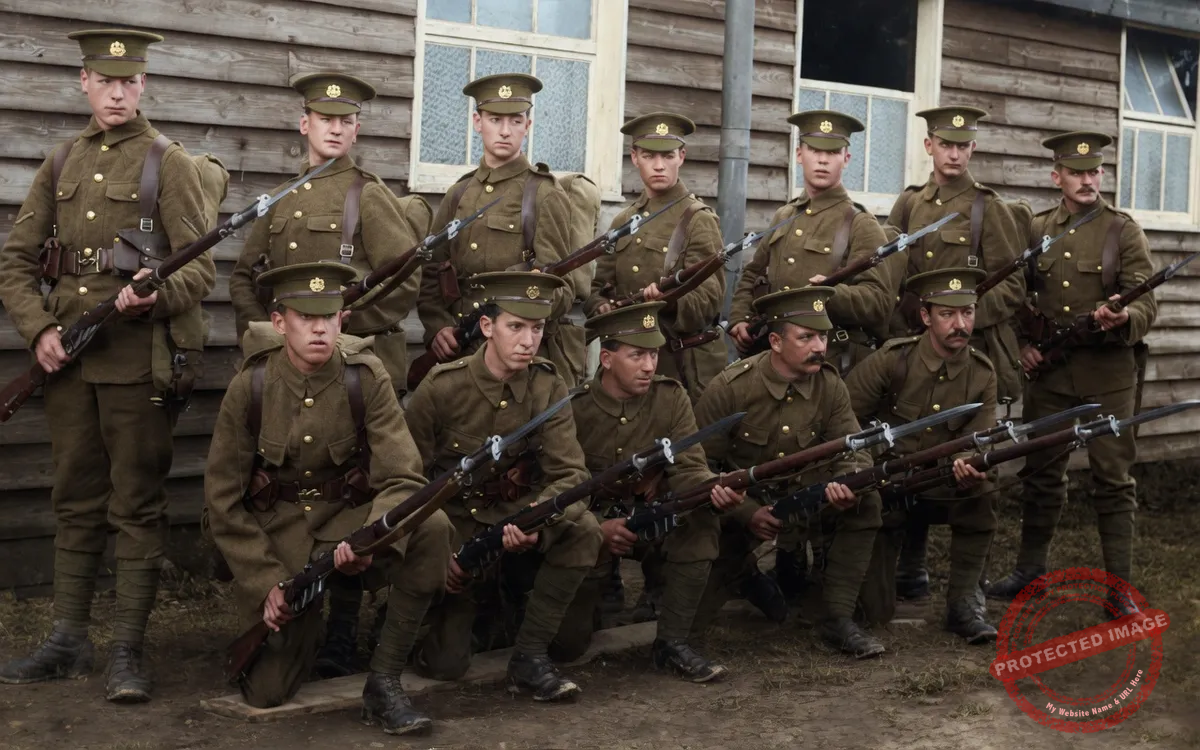
The West Ham Pals: The Story of the 13th Battalion, Essex Regiment
In the early months of the First World War, as Britain grappled with mounting casualties on the Western Front, communities across the country stepped forward to form “Pals” battalions—units made up of friends, neighbours and workmates who wanted to serve together. One such group emerged from the bustling streets of East London in December 1914. The Mayor of West Ham successfully petitioned the War Office for permission to raise a local infantry force, and the 13th (Service) Battalion of the Essex Regiment was born. Quickly nicknamed the West Ham Pals, the unit drew hundreds of eager volunteers from the borough and surrounding areas, including Stepney, Silvertown, Leyton, Limehouse, Barking and Bow. Many were among the first generation of passionate supporters of West Ham United Football Club, whose home at the Boleyn Ground became a focal point for recruitment drives. By late February 1915 more than 1,000 men had signed up, and the battalion eventually reached full strength of around 1,300. Brothers, cousins and workmates enlisted side by side, united by a fierce local pride and a shared desire to “do their bit” against the Germans.
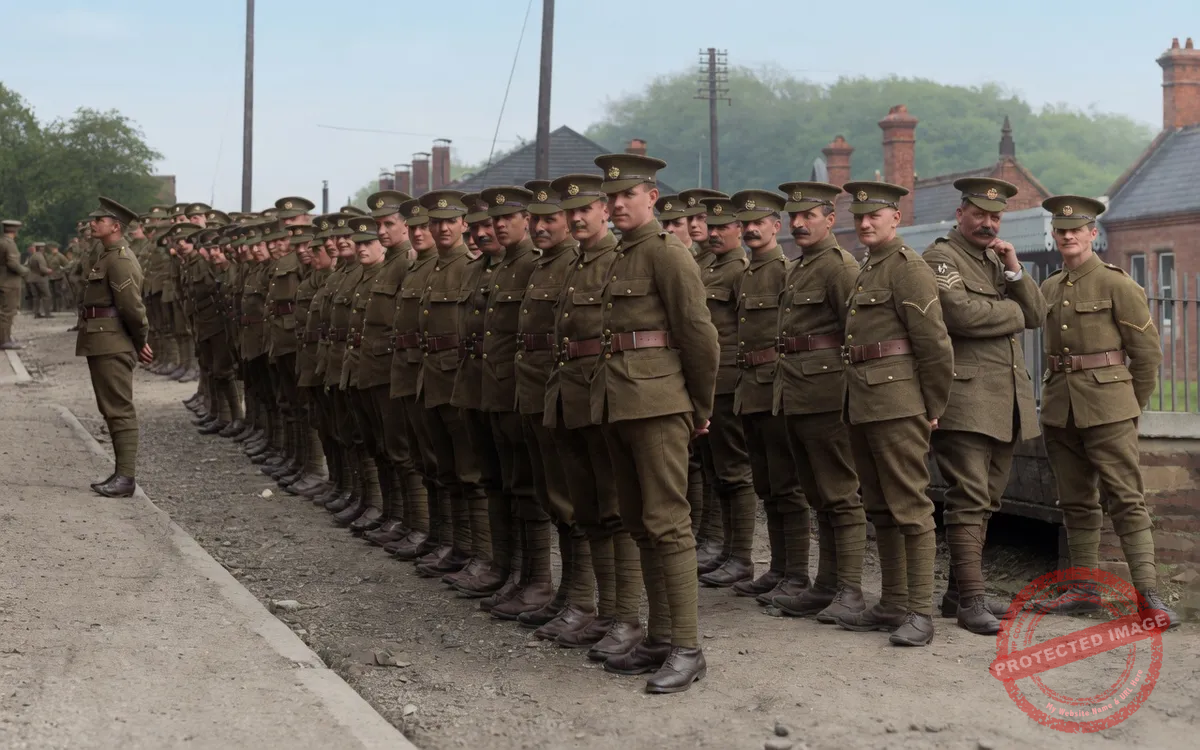
The recruits arrived with little military experience and initially lacked uniforms or rifles. Training began locally before moving to advanced infantry drills on Salisbury Plain. Three volunteers tragically lost their lives during this period, yet the spirit of the battalion remained unbroken. In November 1915 the West Ham Pals crossed to France as part of the 100th Brigade, 33rd Division, later transferring to the 6th Brigade, 2nd Division. They would spend the rest of the war fighting alongside the 17th (Service) Battalion of the Middlesex Regiment—the famous Footballers’ Battalion—cementing an enduring link between the two football-linked units.
From the muddy trenches of the Western Front the Pals threw themselves into some of the conflict’s most brutal engagements. In 1916 they endured the horrors of the Battle of the Somme, facing relentless shelling and machine-gun fire in actions around Delville Wood and Guillemont. The following year they took part in the assault on Vimy Ridge before earning national headlines at the Battle of Cambrai in late 1917. There, small groups of West Ham men staged an epic “last stand,” holding isolated positions against overwhelming odds until nightfall allowed survivors to slip back through shell holes. Newspapers across Britain reported the bravery of these East End soldiers, many of whom shouted the club’s battle cry “Up the Hammers!” as they advanced. Officers earned multiple Military Crosses, while ranks received Military Medals and Distinguished Conduct Medals for their courage under fire.
The cost was devastating. Of the original volunteers, roughly one in four were killed in action and another half returned home severely disabled by wounds. The remainder carried invisible scars for the rest of their lives. By early 1918 the battalion had been so depleted that it was disbanded, its surviving men redistributed to other units. The West Ham Pals never received a grand victory parade; instead they slipped quietly back into civilian life, their extraordinary contribution largely forgotten outside their own community.
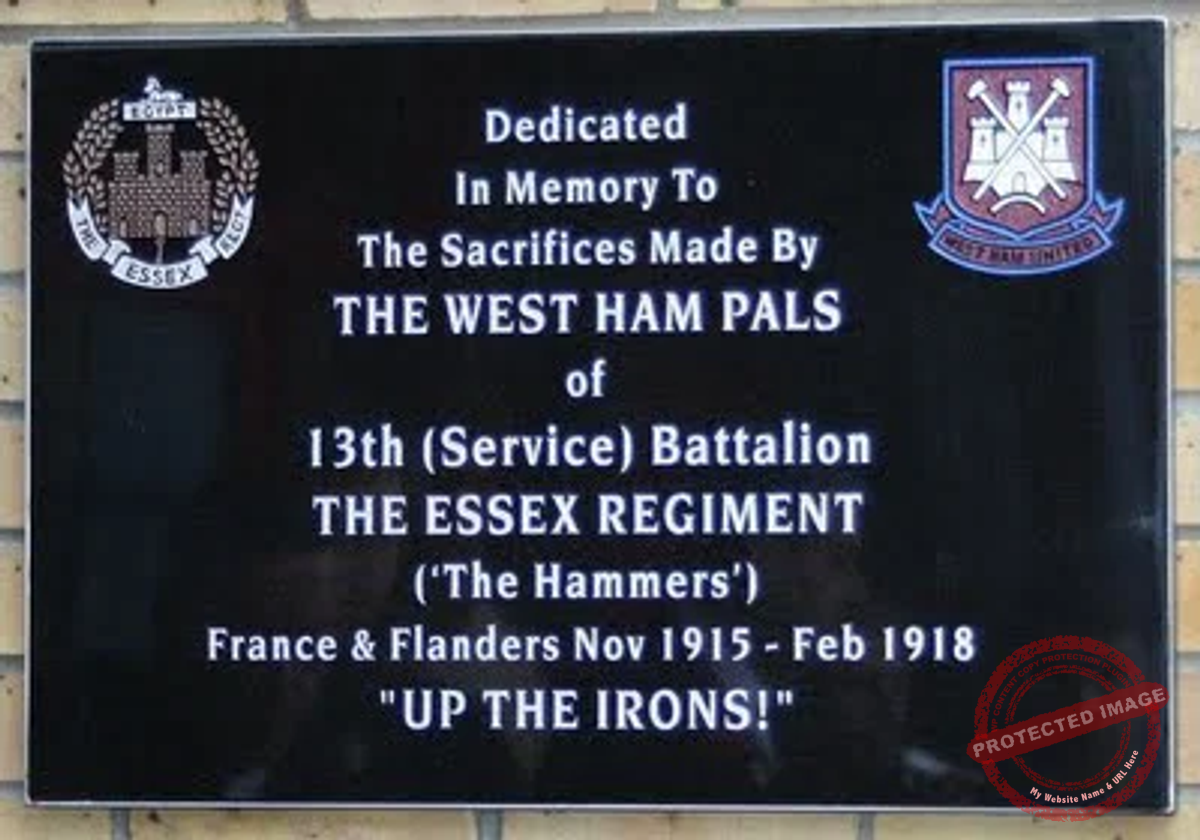
Today their sacrifice is remembered with pride by West Ham United supporters. A memorial plaque unveiled at the Boleyn Ground in 2009, in front of fans and representatives of the Royal Anglian Regiment, ensures that the story of these local heroes lives on. The West Ham Pals remain a powerful symbol of the deep bond between the club, its supporters and the wider East London community—a reminder that long before modern footballers wore poppies, ordinary fans in flat caps answered the call and marched to war under the claret and blue. Their legacy endures every time the chant “Up the Hammers!” echoes around the stadium, honouring not just a football club but the brave men who once carried that spirit into the fires of the Great War.
GIPHY App Key not set. Please check settings