
1895–1909: From Ironworks to a Proper Club West Ham started life as Thames Ironworks in 1895, the works team of a busy shipyard in east London. In 1898 they turned professional, won the Southern League Second Division title, then in 1900 officially became West Ham United. They moved into the Boleyn Ground in 1904, which would become their spiritual home for over a hundred years. Those early years were all about building a proper football club from a factory side, with local east London lads forming the backbone of the team.
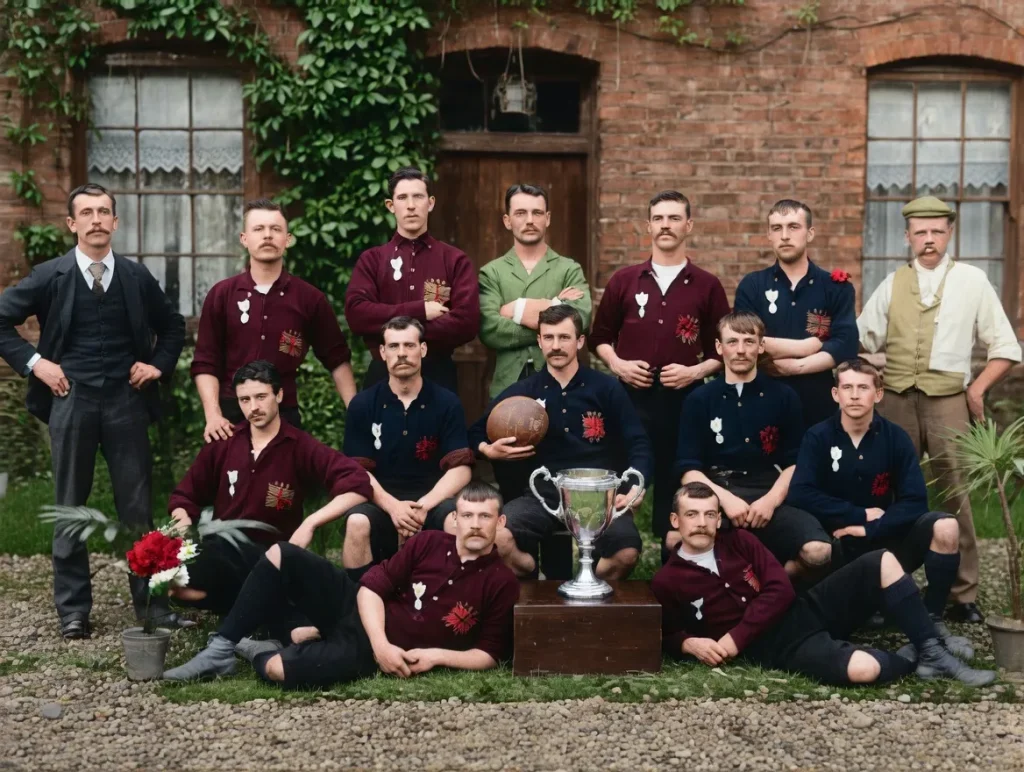
1910s: The First Taste of Success The 1910s brought West Ham their first real success. In 1918 they won the London Combination title during the war years, and by 1919 they’d earned promotion to the Second Division. The club was growing fast, crowds were swelling, and they were starting to make a name for themselves beyond east London. Players like Syd Puddefoot became big stars, and the foundations were laid for what was to come.
1920s: Wembley Heartbreak and Top-Flight Arrival The decade kicked off with promotion to the First Division in 1923 as runners-up. That same year, West Ham reached the very first FA Cup final at the new Wembley Stadium — the famous White Horse Final — but lost 2-0 to Bolton. It was a bittersweet moment: huge crowds, national attention, yet no trophy. The club was now mixing it with the big boys, laying down roots in the top flight for the next nine seasons.
1930s: Consolidation and Wartime Spirit Relegated in 1932, West Ham spent most of the decade in the Second Division, battling for stability. The highlight came in 1940 with the inaugural Football League War Cup win against Blackburn. The Boleyn Ground became a symbol of east London resilience during the war years, with fans and players showing incredible spirit amid tough times.
1940s-1950s: The Academy Takes Shape Post-war football saw Ted Fenton build the foundations of the famous “West Ham Way” — a passing, technical style focused on youth. Promotion back to the top flight came in 1958. Young talents like Bobby Moore were breaking through, and the club’s reputation for developing clever, ball-playing footballers was born. It was the quiet groundwork for the glory that followed.
1960s: The Golden Era This was West Ham’s finest decade. Under Ron Greenwood, they lifted the FA Cup in 1964, then stunned Europe by winning the Cup Winners’ Cup in 1965. Three Hammers — Bobby Moore, Geoff Hurst and Martin Peters — starred in England’s 1966 World Cup triumph. Magical nights at Wembley, a European trophy, and three world champions in claret and blue. Pure east London magic.
1970s: More Silverware and Near Misses John Lyall took over and delivered another FA Cup in 1975 against Fulham. They reached the Cup Winners’ Cup final again in 1976 but lost to Anderlecht. Relegation hit in 1978, yet the decade was defined by cup success and loyal stars like Billy Bonds. The Irons proved they were dangerous in knockout football.
1980s: Cup Glory and a Near Miss John Lyall’s side made history in 1980 by beating Arsenal 1-0 in the FA Cup final while still in the Second Division — Trevor Brooking’s looping header sealed it. They followed up by winning the Second Division title in 1981. The highlight was a third-place finish in 1986, the club’s highest-ever league position, powered by the deadly strike partnership of Tony Cottee and Frank McAvennie. It was a decade of punching above their weight.
1990s: Exciting Premier League Football After yo-yoing between divisions, West Ham returned to the Premier League in 1993 and played some of their most entertaining football ever. Harry Redknapp’s side produced stars like Rio Ferdinand, Frank Lampard and Joe Cole. In 1999 they won the Intertoto Cup and finished fifth, qualifying for Europe, with Paolo Di Canio becoming a true cult hero at Upton Park.
2000s: Rollercoaster Survival Battles The decade was defined by relegation in 2003, immediate promotion via the 2005 play-off final, and reaching the 2006 FA Cup final, where they lost to Liverpool on penalties. The dramatic 2007 great escape, helped by Carlos Tevez, saw them survive…on the final day of the season in incredible fashion. It was a decade of constant fight to stay in the Premier League, with young academy talents often lighting up the team.
2010s: New Stadium, New Chapter Relegated in 2011, West Ham bounced straight back through the play-offs in 2012. Under Slaven Bilic they enjoyed a brilliant 2015-16 season, finishing seventh with Dimitri Payet pulling the strings. The emotional farewell to Upton Park came in 2016 before the move to the London Stadium. Managers came and went, but the club showed real flashes of quality and growing ambition in their new home.
2020s: European Glory Returns David Moyes transformed the side into a competitive force. After reaching the Europa League semi-finals in 2022, West Ham finally ended a 43-year wait for major silverware by winning the Europa Conference League in 2023. Jarrod Bowen’s last-gasp winner against Fiorentina in Prague delivered their first European trophy since 1965 — a proud moment that united the whole club.